
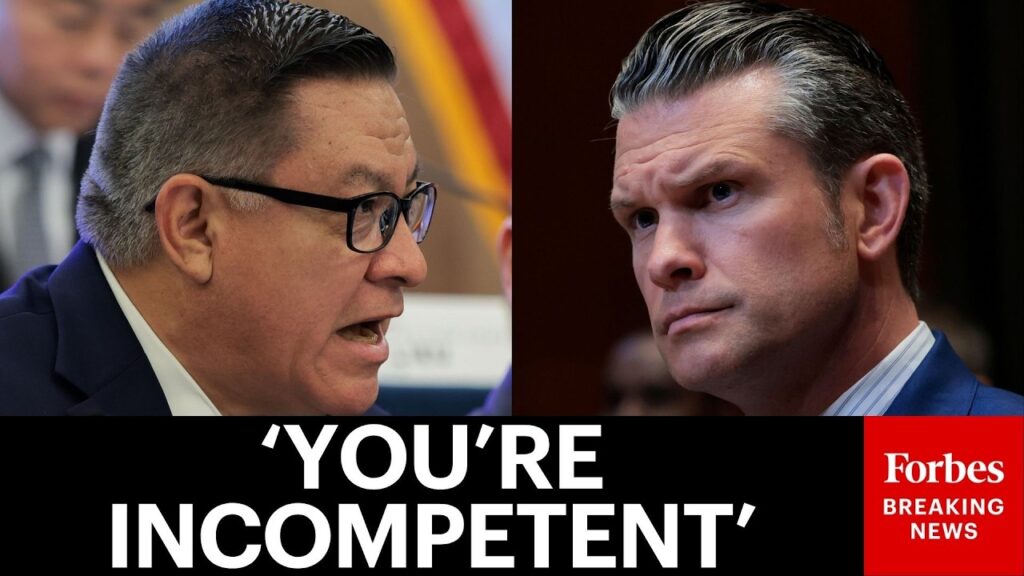
In a fiery congressional hearing, Representative Salud Carbajal unleashed a blistering attack on Pete Hegseth, calling him incompetent to his face amid heated debates over military policies and the escalating costs of the Iran war. This explosive exchange 𝓮𝔁𝓹𝓸𝓼𝓮𝓭 deep rifts in Washington, with Carbajal accusing the administration of fiscal recklessness and endangering troops.
The confrontation unfolded during a session of the House Armed Services Committee, where Hegseth, a prominent figure in defense circles, faced tough questioning. Carbajal, a California Democrat, wasted no time in linking the Trump administration’s decisions to soaring taxpayer burdens. He highlighted estimates that the Iran conflict is draining $1 billion daily from public funds, driving up gas prices and inflating the cost of living for everyday Americans.
Carbajal’s pointed remarks painted a picture of strategic confusion, questioning the war’s origins, objectives, and endgame. “To me, and I assume to the American people, it is unclear why we started this war, how it will end, and what anyone gained from it,“ he stated sharply. Hegseth responded by defending the expenditures, estimating less than $25 billion spent so far and framing it as essential to prevent Iran from acquiring nuclear weapons.
The back-and-forth intensified as Carbajal shifted focus to international repercussions. He criticized the lifting of sanctions on Russian oil, calling it a “massive gift to Putin“ that could bolster Russia’s illegal invasion of Ukraine. Hegseth downplayed concerns, boasting about U.S. energy dominance and Russia’s battlefield failures, but Carbajal pressed for clarity, demanding yes-or-no answers that never fully materialized.
This segment of the hearing revealed broader frustrations with the administration’s approach to global threats. Carbajal argued that easing sanctions might empower adversaries, potentially prolonging conflicts and undermining U.S. interests. Hegseth’s evasive replies only fueled the tension, with the witness emphasizing America’s superior military capabilities while sidestepping direct accountability.
Turning to domestic military matters, Carbajal zeroed in on a controversial policy change. The Department of Defense’s decision to drop the mandatory annual flu shot for service members drew fierce criticism. Carbajal called it reckless, noting that this requirement has been in place since 1950 to safeguard troops from illness. He warned that scrapping it could weaken force readiness and increase health risks.
Hegseth countered by touting individual choice, insisting that well-informed service members deserve autonomy over such decisions. “Allowing well-informed Americans who serve our country to make a choice is not reckless,“ he said, adding that commanders could still enforce mandates in specific scenarios, like on submarines. But Carbajal dismissed this as shortsighted, tying it back to what he sees as systemic failures.
The climax came when Carbajal delivered his unfiltered verdict: “Mr. Hegseth, I stand by what I said last time you were here. You were incompetent then, you’re incompetent now, and you’re the gift that keeps on giving when it comes to incompetence.“ This direct accusation echoed through the chamber, leaving witnesses and committee members stunned.
Such a public dressing-down in a high-stakes hearing underscores the partisan divides gripping U.S. foreign and defense policy. With global tensions rising, from the Middle East to Eastern Europe, Carbajal’s outburst signals growing opposition to the administration’s hardline tactics. Critics argue these approaches are not only costly but also ineffective, potentially inviting more instability.
Hegseth, often a vocal advocate for aggressive military stances, found himself on the defensive throughout. His responses, while attempting to project confidence, failed to quell the barrage of questions about fiscal oversight and strategic planning. This episode highlights the scrutiny facing key figures in the defense establishment as elections loom and public discontent mounts.
Carbajal’s remarks resonated beyond the hearing room, quickly going 𝓿𝒾𝓇𝒶𝓁 on social media and drawing reactions from across the political spectrum. Supporters praised his forthrightness, viewing it as a necessary check on unchecked authority, while detractors accused him of grandstanding. The incident has reignited debates about military spending, with experts warning of long-term economic strains.
In the broader context, the Iran war remains a flashpoint. Initially positioned as a decisive strike against nuclear ambitions, it has morphed into a protracted engagement with unclear outcomes. Carbajal’s interrogation brought these issues to the forefront, forcing a discussion on whether the financial toll is justified amid rising domestic challenges like inflation and energy costs.
As the hearing progressed, other committee members weighed in, associating themselves with Carbajal’s concerns. Ranking Member Adam Smith and others echoed calls for transparency, emphasizing that the American public deserves straight answers on matters of war and peace. This collective pressure could influence upcoming policy decisions and budgetary allocations.
The decision to end the flu shot mandate has also sparked alarm among health professionals and veteran groups. They argue that voluntary compliance might lead to outbreaks, compromising mission readiness and troop morale. Carbajal’s pointed query about extending this to other vaccines, like those for measles or polio, went unanswered, leaving a cloud of uncertainty.
Throughout the exchange, Hegseth maintained a composed demeanor, but his inability to provide concise responses only amplified perceptions of disarray. This has led to calls for further oversight, with some lawmakers pushing for investigations into the administration’s handling of both foreign conflicts and internal military policies.
The fallout from this hearing could reshape public discourse on national security. As videos of the confrontation circulate, it serves as a stark reminder of the human and financial costs at stake. With elections on the horizon, such moments may sway voter sentiment and force candidates to address these critical issues head-on.
Carbajal’s bold stance has positioned him as a leading voice in opposition circles, potentially galvanizing support for alternative strategies. Meanwhile, Hegseth’s role in defense matters faces renewed scrutiny, with critics questioning his fitness for influence. This event marks a pivotal moment in the ongoing saga of American foreign policy.
Experts are already analyzing the implications, suggesting that the hearing could prompt congressional action on war funding and health protocols. The urgency of these topics cannot be overstated, as they directly impact national security and economic stability.
In conclusion, Representative Salud Carbajal’s direct challenge to Pete Hegseth has thrust these debates into the spotlight, demanding immediate attention and accountability from leaders. As the nation grapples with these challenges, the path forward remains uncertain, but one thing is clear: the call for competence and clarity grows louder by the day.
