
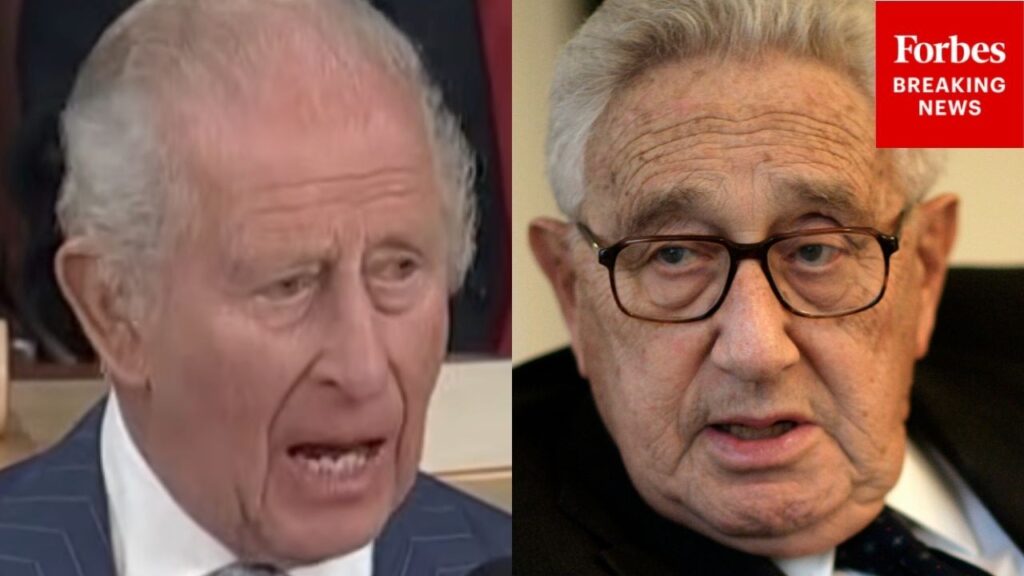
In a stunning address that has set diplomatic circles ablaze, King Charles III has invoked the late Henry Kissinger’s vision of a transatlantic alliance, urging a renewed US-European partnership amid escalating global threats. Speaking in the US, the monarch highlighted the enduring bond between Britain and America, drawing parallels to World War II and warning that shared values face unprecedented dangers today. This marks a pivotal moment in royal diplomacy, emphasizing urgency in an era of volatility.
The King’s words, delivered with unmistakable gravity, echoed through the halls of power, referencing Kissinger’s description of President Kennedy’s “soaring vision“ of an Atlantic partnership built on the twin pillars of Europe and America. This alliance, Charles asserted, is more vital now than ever, as the world grapples with conflicts that demand collective resolve. His speech, a rare foray into contemporary geopolitics, underscores the fragility of peace in a time of rising tensions, from Eastern Europe to the Indo-Pacific.
Drawing on history, the monarch recalled his grandfather, King George VI, as the first reigning British sovereign to visit the United States in 1939. Accompanied by Queen Elizabeth, the Queen Mother, that trip came amid the dark march of fascism, a prelude to the alliance that helped defeat tyranny. Charles’s remarks serve as a stark reminder that, just as in that era, shared democratic values must prevail against modern adversaries seeking to undermine global stability.
Today, the world is more unpredictable and perilous than when Queen Elizabeth II addressed this chamber in 1991, according to the King. He painted a picture of interconnected threats—cyber warfare, territorial aggressions, and economic disruptions—that no single nation can confront alone. This call to action resonates deeply, positioning the US-UK relationship as the bedrock of Western security, a partnership forged in the fires of history yet requiring constant reinforcement.
Charles emphasized that renewal begins with bolstering defense capabilities, a direct nod to Britain’s recent commitments. Under his prime minister’s guidance, the United Kingdom is embarking on its largest sustained increase in defense spending since the Cold War. This transformation, he noted, ensures the nation remains “fit for the future,“ echoing his own proud service in the Royal Navy over five decades ago.
That naval legacy, inherited from his father Prince Philip, grandfather King George VI, great-uncle Lord Mountbatten, and great-grandfather King George V, adds a personal layer to his message. By weaving family history into the narrative, Charles humanizes the stakes, illustrating how generations have upheld this alliance through sacrifice and duty. It’s a poignant reminder that the bonds of blood and alliance are intertwined in the defense of freedom.
As global leaders digest these remarks, the implications for NATO and transatlantic relations are profound. The King’s speech, devoid of political posturing, calls for pragmatic collaboration, urging America and Europe to build on their shared heritage rather than rest on laurels. In an age of misinformation and division, his words cut through the noise, demanding immediate attention to fortify against emerging dangers.
Experts are already analyzing how this address might influence upcoming summits and policy decisions, with whispers of renewed defense pacts gaining momentum. Charles’s invocation of Kissinger—a master of realpolitik—signals a bridge between past strategies and present needs, highlighting the timeless relevance of diplomatic foresight. This is not mere rhetoric; it’s a clarion call for action in a world on the brink.
The urgency in the King’s tone was palpable, as he stressed that disregarding the foundations laid over the past 80 years would be folly. Instead, he advocated for innovation in security measures, from advanced technologies to strengthened alliances, to counter the multifaceted threats of the 21st century. His message resonates beyond borders, inspiring a sense of shared destiny among nations that have long stood as guardians of democracy.
In closing, King Charles’s speech serves as a watershed moment, blending royal tradition with contemporary urgency. By spotlighting the indispensable US-European partnership, he has thrust the conversation into the forefront of global discourse, compelling leaders to act swiftly. As the world watches, this alliance’s renewal could define the course of international relations for years to come, ensuring that the lessons of history illuminate the path forward.
