
Breaking News Analysis: Shooting at the White House Correspondents’ Dinner
A shocking security incident unfolded on April 25, 2026, during the annual White House Correspondents’ Dinner in Washington, D.C. Gunfire erupted near the main security screening area of the event, forcing the immediate evacuation of U.S. President Donald Trump, senior officials, journalists, and more than 2,000 attendees.
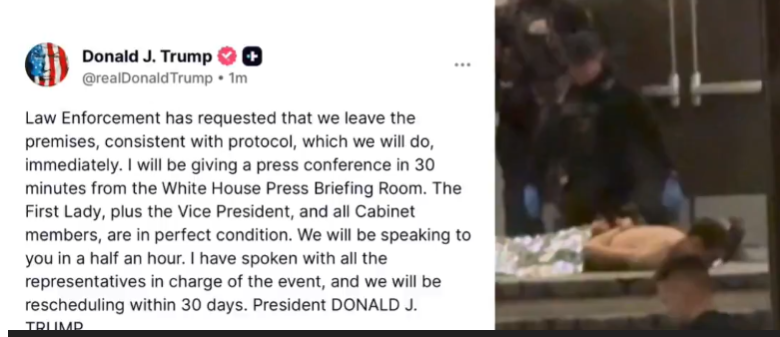
Authorities quickly confirmed that the president and all protected individuals were safe. A suspect—armed with multiple weapons—was apprehended by the U.S. Secret Service after attempting to breach the security perimeter. One officer was struck but survived due to a bullet-resistant vest.
What Happened
The incident began shortly after Trump arrived at the Washington Hilton, where the dinner was being held. Witnesses reported hearing gunshots around 8:30 p.m., triggering panic inside the venue. Guests, including journalists and government officials, took cover under tables while armed security personnel rushed to secure the area.
The event was ultimately canceled, with officials stating it would be rescheduled within 30 days.
Key Issues and Possible Causes
1. Security Vulnerabilities
Despite being one of the most heavily protected political events in the United States, the attacker managed to reach a sensitive area near the security checkpoint. Early reports suggest the suspect may have exploited weaknesses in screening or perimeter control.
This raises serious concerns:
- Were there gaps in coordination between agencies?
- Was the screening process sufficient for such a high-risk event?
2. Rising Political Violence
This incident reflects a broader trend of increasing political violence in the United States. It follows previous threats and attacks involving high-profile political figures, including earlier assassination attempts targeting Trump.
Contributing factors may include:
- Deep political polarization
- Increased hostility toward public officials
- Online radicalization and extremist rhetoric
3. Symbolic Targeting of High-Profile Events
The White House Correspondents’ Dinner is not just a social gathering—it is a symbolic event that brings together political power and the media. Attacking such a venue suggests an intent to:
- Maximize visibility and media attention
- Disrupt democratic institutions
- Send a political message
4. Access to Weapons
Reports indicate the suspect carried multiple weapons, highlighting ongoing concerns about access to firearms and the ability of individuals to carry out attacks even in secured environments.
Government Response
President Trump later confirmed that the suspect had been captured and praised law enforcement for their rapid response. He also used the incident to call for stronger security measures, including improved facilities for high-level events.
Authorities, including the FBI and Secret Service, are continuing to investigate the suspect’s identity, motives, and how the breach occurred.
Conclusion
The shooting at the White House Correspondents’ Dinner highlights a troubling intersection of security risks, political tension, and public safety concerns. While swift action by security forces prevented fatalities, the incident exposes vulnerabilities that will likely lead to major reviews of event security and broader discussions about political violence in the United States.
This remains a developing story, and further details—especially regarding the suspect’s motive—will be critical in understanding the full scope of the attack.
