
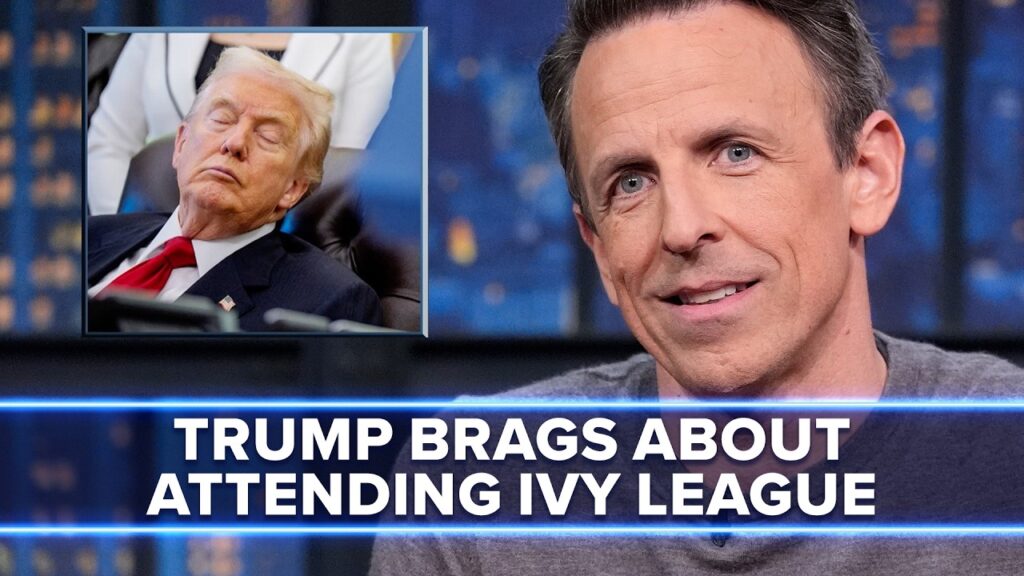
In the midst of rising domestic economic pressures and an ongoing U.S. military campaign against Iran, President Donald Trump has drawn attention for emphasizing his personal intelligence and academic credentials, particularly his attendance at the Wharton School of the University of Pennsylvania (an Ivy League institution). During recent public remarks, Trump declared, “I’m real smart,” positioning his background as evidence of superior decision-making amid challenges like surging energy costs and foreign policy complexities.
Academic Record and Family Influence Under Scrutiny Critics have highlighted longstanding reports questioning the narrative of academic excellence. A former Wharton professor reportedly described Trump as “the dumbest goddam student I ever had,” while accounts from classmates and family members—including claims that his mother once called him an “idiot” and an “embarrassment”—have resurfaced in public discourse. Additional allegations include Trump finishing near the bottom of his class (e.g., 344th out of 346), with suggestions that his father may have arranged for paid exam assistance or even SAT proxies to secure admission and graduation. These claims contrast sharply with Trump’s frequent assertions of intellectual prowess, often framed as self-evident rather than backed by detailed achievements.
Energy Crisis and Shifting Rhetoric The boast comes against a backdrop of persistent energy price increases, with gas costs rising for over a week and households facing higher utility bills. Trump, who previously promised to drive prices below $2 per gallon, has pivoted to argue that elevated prices benefit the U.S. as a leading oil producer, framing them as a marker of national strength and independence. Observers have labeled this shift as inconsistent with earlier campaign pledges, accusing the administration of downplaying consumer hardship in favor of a broader energy-dominance narrative.
Contradictory Messaging on the Iran War The administration and supportive Republicans have offered mixed signals on the duration and nature of U.S. involvement in Iran. Some statements describe the operation as a brief “excursion” expected to conclude swiftly (e.g., “very complete, pretty much” in days or weeks), while others acknowledge a potentially longer engagement. The conflicting timelines have fueled satire and criticism, with comparisons drawn to overly optimistic wartime projections. Figures like Sen. Lindsey Graham have been parodied for enthusiastic support of rapid success, highlighting perceived gaps between rhetoric and strategic realities on the ground.
Broader Political Context The pattern of self-congratulatory claims—echoing past instances where Trump has boasted about intelligence without external validation—has become a recurring theme in critiques of his leadership style. Detractors argue that true expertise is demonstrated through actions and results, not repeated assertions, while supporters view the confidence as essential to projecting strength in turbulent times. As economic strains and military developments continue, such messaging risks amplifying perceptions of disconnect between elite self-perception and everyday American concerns.
