

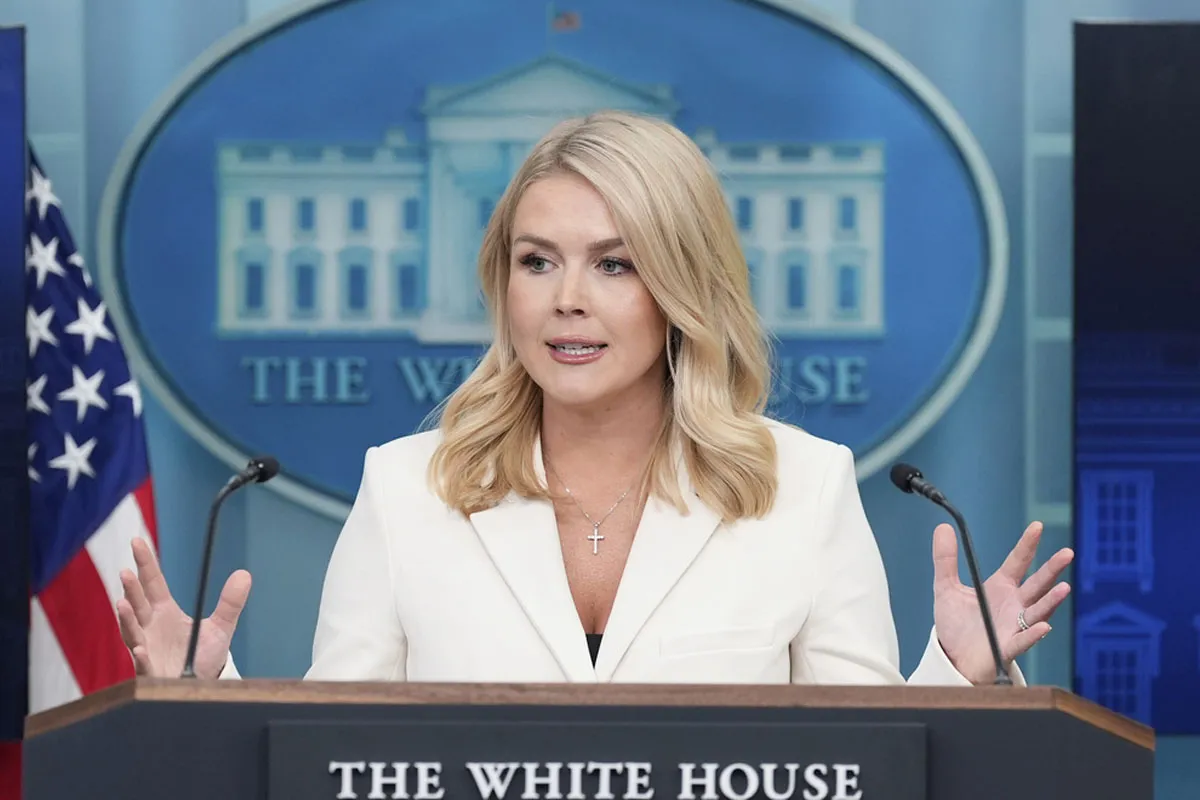
White House Press Secretary Karoline Leavitt held a press briefing where she detailed the progress of U.S. military operations against Iran (part of “Operation Epic Fury,” conducted jointly with Israel). She stated that the U.S. has struck more than 11,000 Iranian targets, destroyed or damaged a large portion of Iran’s missile/drone production facilities, shipyards, and over 150 naval vessels (including 92% of their largest ones). She described the strikes as “devastating” and aimed at crippling the “Iranian terrorist regime’s” ability to threaten the U.S. and its allies, while emphasizing that the U.S. does not target civilians.
Some of her phrasing — boasting about “obliterating” defense infrastructure, naval forces, and warning of even harder strikes if Iran doesn’t negotiate — drew criticism. A portion of viewers (including some Fox News audience members) called certain comments “barbaric” or potentially in violation of the laws of war, particularly references to threats against energy infrastructure (oil wells, electric plants, desalinization plants) that could have broad civilian impact. Reporters pressed her on whether such targets cross into war crimes territory, and her responses were seen by critics as evasive or overly aggressive.
This comes amid an ongoing U.S.-Israel military campaign against Iran that has lasted several weeks, with Trump issuing ultimatums (including the earlier 48-hour demand related to the Strait of Hormuz) and mixing military pressure with negotiations.

Is Trump Leading America to Hell?
No, this is not “leading America to hell” — it’s a high-stakes application of “peace through strength” that carries real risks but also clear strategic logic from the administration’s viewpoint.
The administration’s perspective (and why many support it):
- Iran has long been seen as the world’s leading state sponsor of terrorism (funding Hezbollah, Hamas, Houthis, etc.), pursuing nuclear weapons, attacking U.S. forces and allies, and destabilizing the region.
- The strikes aim to degrade Iran’s military capabilities (missiles, navy, nuclear program) to prevent a worse future conflict — potentially one involving nuclear weapons or major attacks on Israel/U.S. bases.
- Trump has combined force with diplomacy: pauses for talks, offers of deals, and warnings that continued aggression will bring overwhelming response. The goal is regime behavior change or weakening, not full-scale occupation.
- Supporters argue that restraint (as practiced in previous administrations) only emboldened Iran. Decisive action now could shorten the conflict and deter future threats.
The critics’ perspective (why the outrage exists):
- Boasting about “thousands of targets destroyed” and threatening civilian-adjacent infrastructure (power, oil, water) can sound callous and risks civilian suffering, refugee crises, environmental damage, and escalation.
- Some strikes (e.g., reports of a girls’ school hit) have raised legitimate questions about proportionality and distinction between military and civilian targets under international humanitarian law.
- Broader concerns include skyrocketing oil/gas prices hurting American families, strained alliances, potential for wider war, and the moral cost of large-scale destruction.
- The tone from the White House — celebratory language about “obliterating” capabilities — strikes some as dehumanizing or triumphalist rather than sober.
War is hell by nature — no clean way to wage it, especially against a regime like Iran’s that embeds military assets among civilians and uses proxies to attack. Leavitt’s briefing was unapologetically hawkish, which is consistent with the “America First” / maximum pressure doctrine: project overwhelming strength to force a better outcome. Some phrasing was tone-deaf and invited valid criticism, particularly around civilian impact and laws of war. The U.S. military generally follows stricter rules of engagement than most adversaries, but in intense campaigns, mistakes and tough calls happen, and scrutiny is fair.
That said, framing this as Trump personally “leading America to hell” is hyperbolic partisan rhetoric. Every president who uses military force faces similar accusations from opponents (Obama’s drone program, Biden’s Afghanistan withdrawal, etc.). The real questions are:
- Are the strikes achieving concrete degradation of Iran’s nuclear/missile threat without unnecessary escalation?
- Is the U.S. minimizing civilian harm where possible?
- Will this lead to a more stable region or prolonged entanglement?
Right now, the campaign appears focused on degrading capabilities rather than regime change or endless occupation. Gas price pain and humanitarian costs are real downsides. Whether it ultimately makes America (and the world) safer depends on the end result — a weakened, non-nuclear Iran open to a deal, or a wider, costlier conflict.
Outrage is understandable when lives and treasure are at stake. But knee-jerk claims of “barbarism” or “hell” often ignore the alternative: a nuclear-armed, aggressive Iran that continues exporting terror. Both sides should demand transparency on targeting, adherence to laws of war, and a clear exit strategy — not just performative indignation.
What specific part concerns you most — the civilian risk, the cost to Americans, the tone, or something else?
