
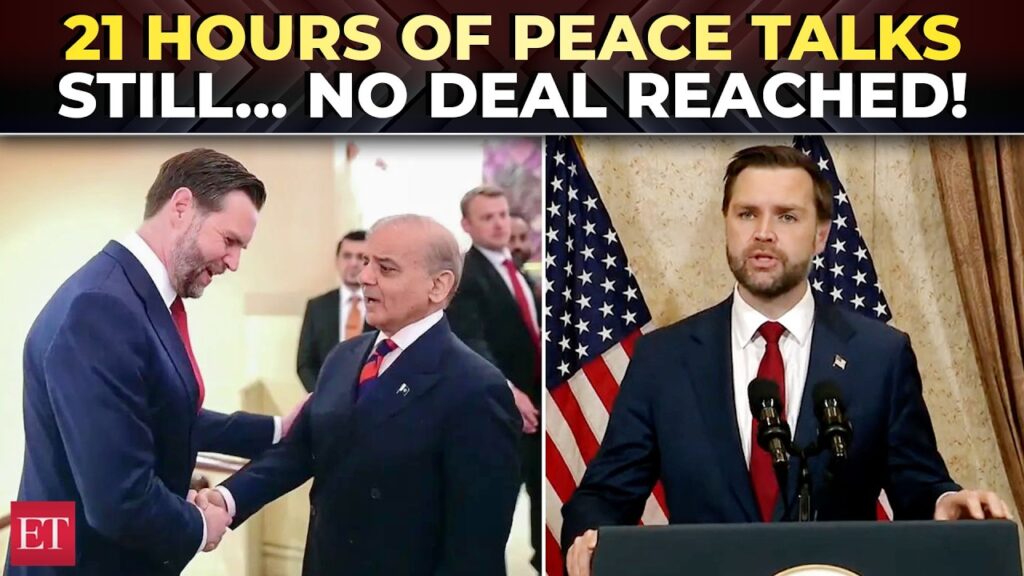
In a 𝓈𝒽𝓸𝒸𝓀𝒾𝓃𝑔 diplomatic rupture, US-Iran peace talks in Islamabad have collapsed after Israeli Prime Minister Benjamin Netanyahu reportedly called Vice President J.D. Vance mid-negotiations, shifting focus and scuttling any chance of agreement on Iran’s nuclear program. After 21 grueling hours, Vance declared the failure, warning of dire consequences for the Middle East as tensions spiral out of control.
The breakdown came amid intense pressure, with Vance emphasizing that the United States held firm on its core demands: Iran must renounce any pursuit of nuclear weapons and dismantle capabilities for rapid development. Speaking from Pakistan, where the talks were hosted, Vance described the outcome as “bad news for Iran,“ underscoring Washington’s unyielding stance. Yet, behind the scenes, Netanyahu’s intervention appears to have been the tipping point, injecting Israeli interests into the fray and derailing fragile progress.
Iranian officials swiftly countered, accusing the US of bad faith and excessive demands that undermined the process. They pointed to Netanyahu’s call as a blatant interference, claiming it redirected Vance’s attention from mutual concessions to bolstering Israel’s security concerns. This accusation adds fuel to the fire, as Tehran warns that such maneuvers erode trust and could push the region toward escalation, including potential conflicts in the Strait of Hormuz.
Pakistan, acting as mediator, expressed disappointment but vowed to continue facilitating dialogue. Prime Minister Muhammad Shahbaz Sharif’s government had hoped the Islamabad summit would yield a ceasefire extension amid ongoing clashes between Israel and Hezbollah. Instead, the failure leaves a volatile vacuum, with fresh strikes reported across Lebanon and US warships now patrolling key waterways, signaling heightened military readiness.
At the heart of the dispute lies Iran’s nuclear ambitions, entangled with issues of sanctions relief, reparations, and control over strategic chokepoints like the Strait of Hormuz. Vance revealed that while some progress was made on peripheral matters, Iran refused to provide the “affirmative commitment“ demanded by President Trump. This refusal not only dashes hopes for de-escalation but also exposes the deep-seated mistrust between Washington and Tehran, built on years of failed diplomacy.
The talks, which stretched into the early hours, involved high-level delegations from both sides, with Pakistan’s military leaders playing a pivotal role in bridging gaps. Despite their efforts, the intrusion of external players like Israel proved insurmountable, highlighting how interconnected regional alliances can undermine global peace initiatives. Now, as the ceasefire teeters on the brink, the world watches nervously for the next move.
Vance’s press conference painted a picture of exhaustive negotiations, where US teams communicated frequently with President Trump and national security advisors. He stressed that America’s “final and best offer“ remains on the table, but without Iranian concessions, the path forward looks bleak. This development comes at a perilous time, with Hezbollah’s counterattacks and Israeli airstrikes 𝓉𝒽𝓇𝑒𝒶𝓉𝑒𝓃𝒾𝓃𝑔 to engulf the region in wider conflict.
Experts warn that the collapse could trigger an arms race or even direct confrontation, as Iran’s leaders signal their resolve to protect national sovereignty. The US, in turn, has ramped up its presence, with warships transiting the Strait of Hormuz for the first time since hostilities intensified, a move interpreted as a show of force. Amid this uncertainty, Pakistan urges restraint, calling for all parties to honor the fragile truce and return to the negotiating table.
The broader implications are staggering, potentially disrupting global oil markets and straining international alliances. With Netanyahu’s call exposing the intricate web of Middle East politics, questions arise about Israel’s influence on US policy and whether this marks a new era of interference in diplomacy. As the dust settles, the failure in Islamabad serves as a stark reminder of the high stakes involved in averting catastrophe.
Vance’s remarks were laced with urgency, noting that the US had been “quite flexible“ but could not compromise on core security threats. Iran’s delegation, meanwhile, dismissed the talks as unproductive, accusing Washington of using the forum to advance ulterior motives. This mutual blame game only deepens the divide, leaving diplomats scrambling to contain the fallout.
In the hours following the announcement, markets reacted sharply, with oil prices surging on fears of supply disruptions. Analysts point to the Strait of Hormuz as a flashpoint, where Iranian control could choke off a fifth of the world’s oil flow. The US Navy’s passage through the strait underscores the administration’s commitment to safeguarding vital trade routes, even as it risks provoking Tehran.
Pakistan’s mediation role has been praised internationally, with officials from both sides acknowledging the host nation’s efforts. Yet, the inability to secure a deal raises doubts about future talks, especially with Netanyahu’s intervention casting a long shadow. World leaders are now calling for calm, fearing that any misstep could ignite a full-scale war.
The collapse echoes past failures, such as the unraveling of the JCPOA, but with added urgency due to current conflicts. Hezbollah’s ongoing skirmishes with Israel have already displaced thousands, and without a deal, the violence could spread, drawing in other actors and destabilizing the region further. The US, under Trump, has made it clear that nuclear proliferation is non-negotiable, a position that hardens as tensions mount.
Vance’s frequent updates to Trump highlight the White House’s hands-on approach, with the president reportedly urging a tough line. This real-time involvement suggests that domestic politics played a role, as the administration navigates election-year pressures while managing global crises. Iran’s response has been defiant, with officials vowing to defend their interests, potentially through asymmetric means.
As the Middle East braces for uncertainty, the world is left to ponder the cost of failed diplomacy. The Islamabad talks were meant to be a beacon of hope, but Netanyahu’s call has turned them into a symbol of fragility. With no immediate path to resolution, the stage is set for a dangerous escalation that could reshape international relations for years to come.
The human toll is already evident, with civilians in Lebanon and Gaza bearing the brunt of the violence. Humanitarian organizations warn of a worsening crisis, as aid efforts are hampered by ongoing hostilities. The US-Iran impasse not only threatens peace but also underscores the need for inclusive dialogue that excludes external meddling.
In conclusion, the dramatic end to these negotiations marks a critical juncture in Middle East affairs. As leaders regroup and assess the damage, the international community must act swiftly to prevent a slide into chaos, ensuring that diplomacy prevails over confrontation in this volatile arena.
