
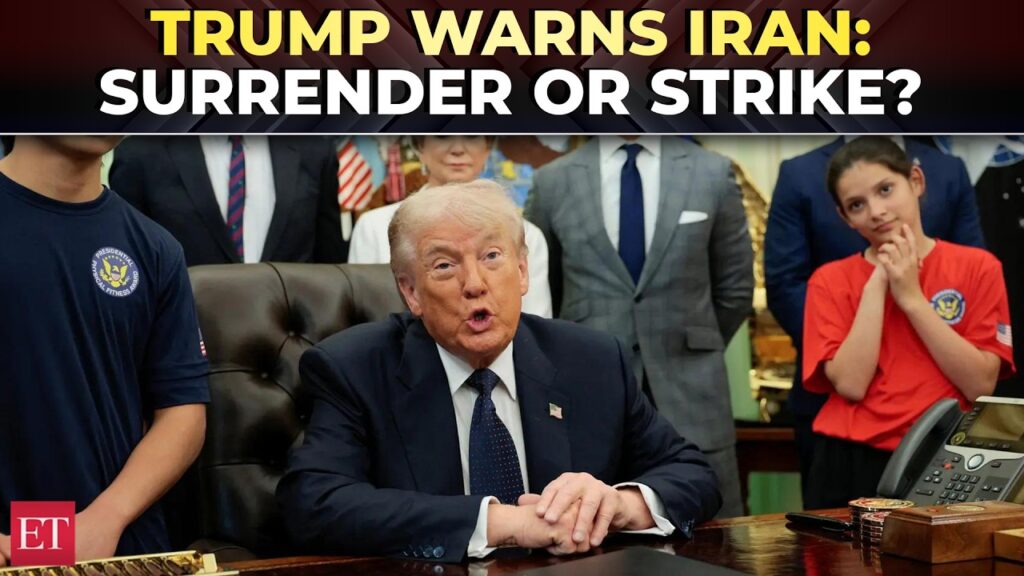
In a startling and chilling address, former President Donald Trump has sent an unequivocal warning to Iran: surrender or face dire consequences. His remarks come on the heels of multiple incidents involving the Iranian military and U.S. forces, as tensions in the region escalate to explosive levels, forcing global attention on a potential new conflict.
As Iranian forces continue aggressive provocations against U.S. naval vessels, Trump asserted that Iran must “wave the white flag of surrender.“ These stark words follow recent confrontations, including Iranian boats reportedly firing on U.S. ships, a clear violation of prior ceasefire agreements. The world is now on high alert as Trump’s comments suggest a potential path toward all-out war once again.
The president characterized the Iranian Navy as desperate, joking about their use of “little boats” and “peashooters,” mocking their inability to effectively challenge the prowess of the U.S. military. His claim that Iranian vessels were engaging in reckless behavior set the tone for a stern message: any show of hostility will be met with swift and overwhelming force from American naval assets stationed in the area.
Just days ago, U.S. military personnel were forced to respond when an Iranian vessel attempted to breach a blockade near vital shipping lanes, a critical and sensitive area for international trade. According to Trump, the U.S. Navy’s display of might sent a clear message, neutralizing threats with pinpoint precision. The former president recounted the nerve-wracking moment when a warning was issued to a suspicious vessel, leading to an engagement that showcased the resolve of the U.S. forces in the region.
Trump further elaborated on the strategic significance of the blockade around the Hormuz Strait, emphasizing that it represents a vital artery for oil shipments crucial to the global economy. With ships lining the waters as though on a “Long Island Expressway,“ maintaining a tight grip on this route is critical, according to military experts. They believe controlling access to the Strait is not just about oil but also about diminishing the Iranian regime’s power to threaten regional stability.
At a recent press conference, Trump didn’t shy away from addressing the severe implications should Iran fail to adjust its course, warning that any escalation could lead to catastrophic consequences. His rhetoric marked a dramatic shift from previous diplomatic engagements, placing Iran’s government under unprecedented pressure to comply or risk severe retribution.
In a surprising twist, Trump hinted at the possibility of arming Iranian protestors, expressing concern for those fighting against the oppressive regime. His statement reflects a broader strategy of supporting regime change from within, giving a voice to those desiring freedom in a country known for its brutal crackdown on dissent.
Meanwhile, U.S.-China relations are intertwining with Iranian issues as Trump prepares for an essential meeting with President Xi Jinping next week. With a clear commitment to maintaining strong ties while tackling issues related to Iran, the outcome of this summit could shift the dynamics of international power. China’s significant reliance on Iranian oil complicates matters, emphasizing the strategic stakes at play.
The backdrop of these geopolitical maneuvers is heightened by the ever-looming threat posed by Iran’s military ambitions, specifically its nuclear capabilities. Trump reiterated that he takes the potential for a nuclear-armed Iran seriously, pointing to past administrations’ failures and what he perceives as dangerous appeasement strategies that emboldened the Iranian leadership.
As tensions mount and the U.S. prepares militarily for any provocations, the global community watches with bated breath. The stakes are high, and the potential fallout from miscalculations in this critical region could reshape economic and geopolitical landscapes around the world.
With historic military assets now in play and a firm stance against Iran’s aggression, the U.S. could be on the precipice of a new military engagement in the Middle East. Trump’s decisive warnings echo loudly—failure to comply will not go unnoticed, taking it to a point of no return for both nations involved.
As political analysts scrutinize the implications of Trump’s statements, the potential for international conflict looms larger. The growing consensus suggests that the U.S. response will be measured but resolute, as every move must balance the urgency of national security with the unpredictable nature of diplomatic relations in volatile circumstances.
The alarm bells are ringing, and the clarity of Trump’s position on Iran is clearer than ever: a failure to bend to U.S. demands could trigger a military response that the world has not seen in decades. As the situation unfolds, one thing remains certain: the tension surrounding U.S.-Iran relations is a story that the world will continue to watch closely in the coming days.
