
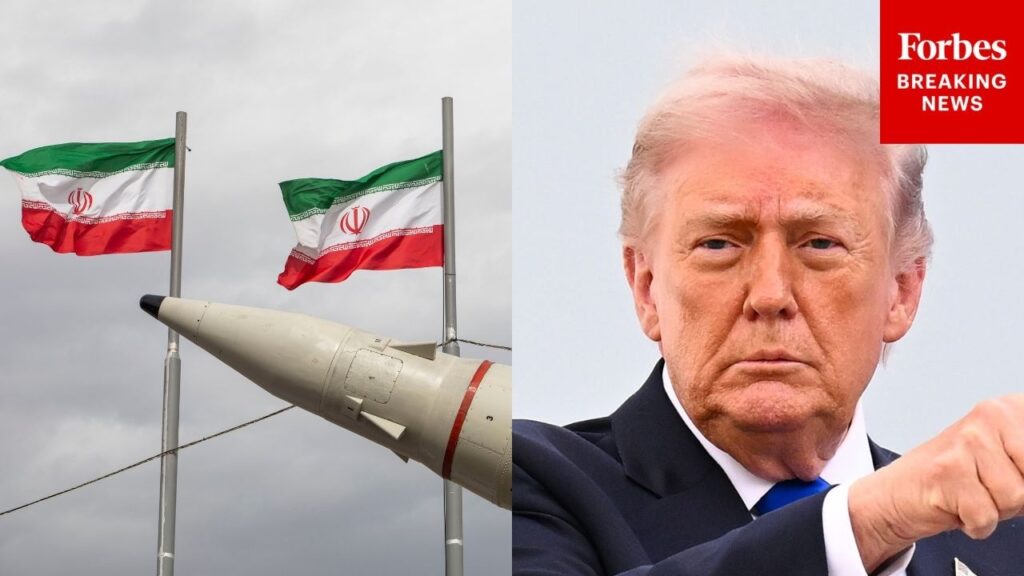
In a remarkable display of steadfast resolve, Donald Trump has emphatically vowed that Iran will not acquire a nuclear weapon. Declaring his administration’s past successes in foreign policy, Trump emphasized the perceived threats posed by Iran while framing his approach as a critical bulwark against nuclear proliferation.
Speaking in a recent address, Trump painted a vivid picture of the stakes at hand, invoking his record-breaking economic achievements and the historic conclusion of multiple wars during his presidency. He argued that the potential for nuclear conflict with Iran was imminent, alluding to a scenario that could have drastically altered global geopolitics.
Trump recounted how his decisions had kept the world safe from the brink of disaster, most notably referencing the tensions between India and Pakistan that could have escalated into a nuclear clash. By positioning himself as the first leader to end eight wars, he underscored his belief in aggressive diplomacy and military action over traditional political maneuvers.
In a direct challenge to the current state of affairs, he stated, “Iran would have had a nuclear weapon in within two weeks,” framing the issue not only as a potential threat to the U.S. but also to Israel and European nations. The former president’s rhetoric was punctuated with urgency, insisting that the actions of Iran’s regime could have dire consequences, stating, “Maybe we wouldn’t all be here right now.”
Trump distinguished his administration’s past actions, particularly the targeting of Iran’s nuclear capabilities through military might. He recalled the deployment of a B-2 bomber that struck Iranian facilities, thus obliterating what he characterized as their nuclear ambitions, prompting a swift and decisive U.S. response that he believes still reverberates today.
“As we know, we have our eyes on Iran all the time,” he asserted, emphasizing an unyielding stance against perceived threats. Trump presented Iran’s diminished military capabilities as a testament to his administration’s effectiveness, stating that their naval power has been decimated, with all of their ships now resting at the bottom of the sea.
He characterized the current Iranian leadership as “sick people” and expressed firm belief that they must never be allowed to possess nuclear weapons. Trump’s critique of Iran extended to their military capabilities, claiming that they have been reduced to “little boats with a machine gun on the front,” and portrayed their diminished air force as being effectively wiped out.
In an increasingly volatile international landscape, Trump’s remarks highlight a renewed focus on Iran as a focal point for U.S. foreign policy. His unwavering commitment to preventing nuclear armament reflects a broader narrative of American exceptionalism, with Trump positioning himself as a protector against global threats. He painted a stark contrast between his previous administration and the current climate, raising the specter of danger that he believes persists under the present leadership.
This relentless rhetoric underscores a frenetic atmosphere in U.S. politics, particularly as discussions surrounding nuclear non-proliferation rise in prominence once more. Advocating for a strong military presence and advanced intelligence operations, Trump mapped out his vision for a continued robust engagement underpinned by military readiness.
While he remains absent from the political scene, Trump’s conviction about Iran underscores a pivotal issue that he perceives will resonate with his base and beyond. The former president’s urgent messages seem designed to reignite discussions on national security and defense, particularly as tensions escalate with adversaries on the global stage.
As the world watches, the implications of Trump’s words resonate beyond U.S. borders. His pledge to never allow Iran to possess nuclear weapons strikes at the heart of international relations in an era marked by uncertainty and strife. Will this proclamation galvanize action or serve merely as a rallying cry for his supporters?
The urgency of the situation cannot be overstated. With the backdrop of ongoing global power shifts, Trump’s declaration serves as a potent reminder of the fragility of peace. His narrative creates a sense of urgency, urging the current administration to take notice while rallying support from those wary of Iran’s ambitions.
Bringing attention to a critical global issue, Trump’s vow is poised to reignite debates about military engagement, diplomacy, and the U.S.’s role in maintaining stability in tumultuous regions of the world. The dialogue surrounding nuclear proliferation remains ever-pertinent, with nations monitoring every statement and policy shift closely.
In these uncertain times, what is clear is the relentless pace of geopolitical shifts. Trump’s warning should not be ignored, especially with Iran continuing to claim a central role in discussions on nuclear weapons and military strategy. As leaders around the world assess their positions, the former president’s commitment is a call to vigilance in a rapidly evolving international landscape.
As this unfolding narrative garners attention, it highlights a broader discourse on America’s foreign policy, security strategies, and diplomatic relations. The resolution—or lack thereof—concerning Iran holds significant implications for not just the Middle East but for global peace and security in the years to come.
