
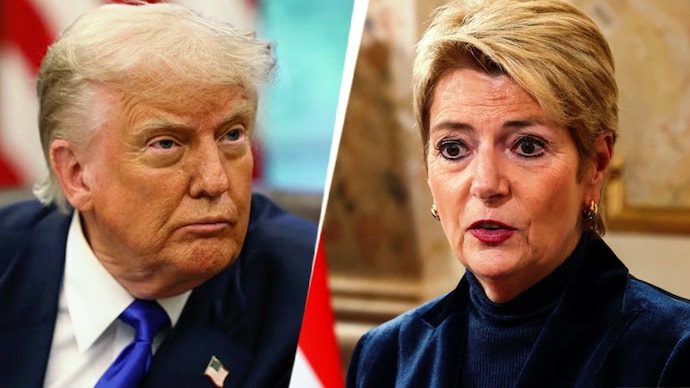
In a stunning diplomatic departure, Bern formally takes sides for the first time since the Napoleonic Wars, sending shockwaves through Washington and across the globe.
GENEVA — For more than two centuries, Switzerland has built an entire national identity around a single word: neutrality. Through two world wars, the Cold War, and countless regional conflicts, the Alpine nation has refused to take sides, offering instead its good offices, its bank vaults, and its silence.
That era ended this week.
In a move that has sent shockwaves through diplomatic capitals, Switzerland has formally declared that former President Donald Trump’s military attacks on Iran constitute a violation of international law. The declaration — made by Federal Councillor Martin Pfister, head of the Federal Department of Defence, Civil Protection and Sport — marks the first time since 1815 that Switzerland has explicitly taken a side in an international armed conflict .
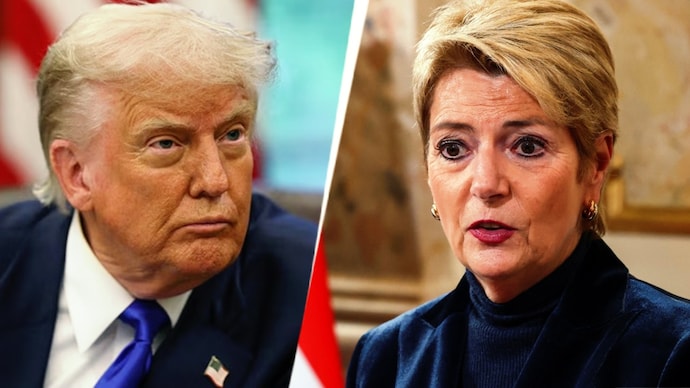
“The Federal Council considers the attacks by the United States and Israel against Iran to be a violation of international law and a breach of the prohibition of violence,” Pfister said in an interview with the Swiss daily Tages-Anzeiger published on Sunday . “We are deeply alarmed by the rapid and dangerous deterioration of the security situation.”
For a country that has avoided taking sides for 211 years — remaining neutral even as Hitler’s armies encircled it and Stalin’s tanks lined up across the border — the statement is nothing short of revolutionary.
The End of an Era
Switzerland’s neutrality is not merely a policy preference; it is a legal and constitutional cornerstone. Codified following the Congress of Vienna in 1815, which ended the Napoleonic Wars, Swiss neutrality was guaranteed by the great powers of Europe — Austria, France, Great Britain, Prussia, and Russia — as a mechanism for maintaining continental stability .
For two centuries, that neutrality has been interpreted strictly. Switzerland did not join the League of Nations’ economic sanctions. It did not enter the United Nations until 2002. It did not send weapons to Ukraine. It did not allow NATO overflights without strict conditions.
But the Trump administration’s campaign against Iran — launched on February 28 in coordination with Israel — appears to have crossed a red line that even Switzerland’s famously cautious diplomats could not ignore .
More Than Words: Concrete Actions
Bern’s condemnation is not purely rhetorical. In the days following Pfister’s statement, Switzerland has taken a series of concrete actions that leave no doubt about its position:
First, the government announced it would no longer authorize new arms exports to the United States for the duration of the conflict . The decision, based on Switzerland’s War Materiel Act and its neutrality obligations, effectively freezes a significant trade relationship: the United States was Switzerland’s second-largest arms importer last year, with sales amounting to approximately $119 million .
“The export of war materiel to countries involved in the international armed conflict with Iran cannot be authorized for the duration of the conflict,” the government said in a formal statement .
Second, Switzerland has denied U.S. military requests to fly over its territory for operations related to the Iran conflict. While some overflights have been permitted — those deemed unrelated to combat operations — Swiss authorities have made clear that the era of automatic approval is over .
Third, Pfister himself has signaled that Switzerland is rethinking its entire posture toward collective defense. A government-commissioned report released last week recommended that Switzerland consider deeper cooperation with NATO, a proposal that would have been unthinkable just a year ago .
A Broader European Backlash
Switzerland is not alone in its assessment. Across Europe, a growing chorus of leaders has questioned the legality and wisdom of Trump’s military campaign.
Spanish Prime Minister Pedro Sánchez has been among the strongest critics, describing the strikes as a “serious mistake” and a violation of international law . Italy’s Defense Minister Guido Crosetto told parliament that the attacks “are clearly outside the framework of international law” . Even Germany, traditionally Washington’s closest European ally, has kept its distance, with Chancellor Friedrich Merz ruling out any military involvement and Defence Minister Boris Pistorius asking pointedly: “What does Donald Trump expect from a handful of European frigates that the mighty U.S. Navy cannot manage alone?”
But Switzerland’s declaration carries unique weight precisely because of its neutrality. When a country that has refused to judge any conflict for two centuries suddenly issues a judgment, the world takes notice.
Why Switzerland Broke Its Silence
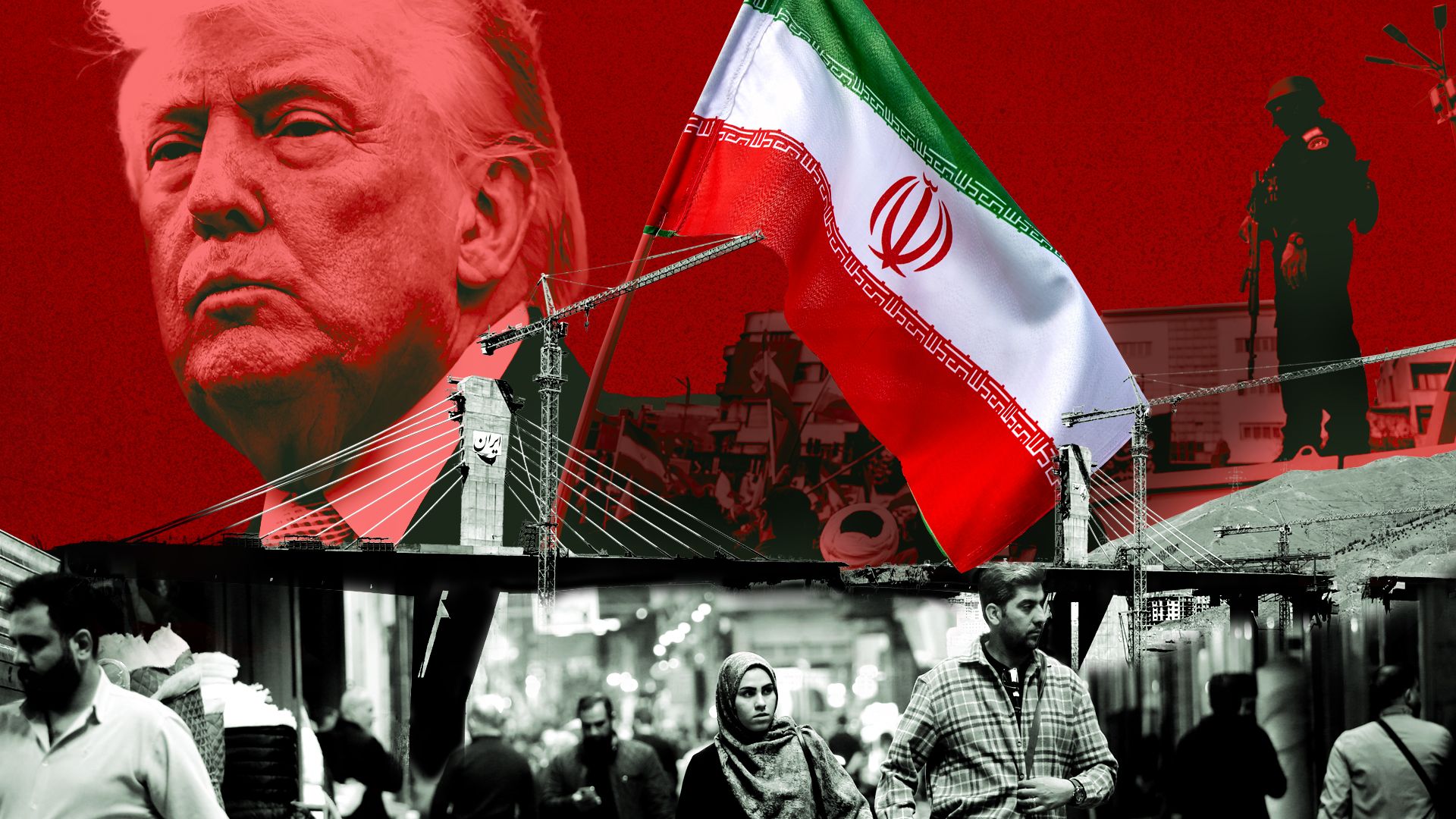
Analysts point to several factors driving Bern’s unprecedented departure from tradition.
The first is the nature of the conflict itself. Unlike the wars in Iraq, Afghanistan, or even Ukraine — where Switzerland maintained its neutral stance while quietly aligning with Western sanctions — the Trump administration’s campaign against Iran has been characterized by what many international lawyers argue is a violation of the UN Charter’s prohibition on the use of force except in self-defense.
“The United States has not provided evidence of an imminent armed attack that would justify the use of force under Article 51 of the UN Charter,” said Evelyne Schmid, a professor of international law at the University of Lausanne . “Without that, the strikes are difficult to defend as lawful.”
The second factor is the humanitarian toll. According to Swiss officials, the bombing of a school in the Iranian city of Minab, which killed more than 160 people, was a particular turning point . Switzerland’s mission to the UN in Geneva has also expressed alarm at statements from senior U.S. officials suggesting that standard rules of engagement do not apply to the conflict .
The third factor is domestic. Swiss voters have grown increasingly uneasy with the country’s arms exports being used in conflicts they view as unjust. A recent parliamentary motion to relax export restrictions for countries including the United States has not yet taken effect and could face a public referendum .
What It Means for the Future
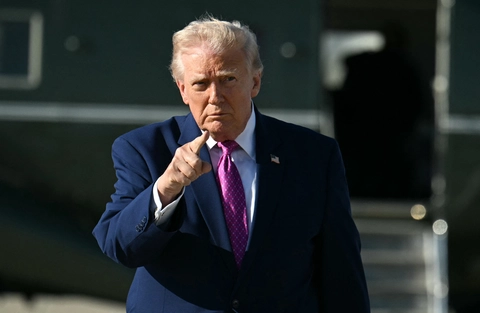
The immediate consequences are clear: U.S. access to Swiss-made arms, ammunition, and military components has been cut off for the duration of the conflict. While existing contracts may still be fulfilled, new orders — including for components used in various weapons systems — are frozen .
But the longer-term implications may be even more significant. Switzerland’s declaration adds legal and moral weight to the growing international chorus questioning the Trump administration’s actions. It may embolden other neutral or non-aligned nations — including Austria, Ireland, and Mexico — to take similar stands.
And for Switzerland itself, the move represents a fundamental rethinking of what neutrality means in the twenty-first century. For 200 years, Swiss neutrality meant silence. Now, it increasingly means speaking out — not on behalf of one side or another, but on behalf of the international legal order itself.
The Washington Reaction
The Trump administration has not officially responded to Switzerland’s declaration. But privately, U.S. officials are said to be furious. Switzerland’s suspension of arms exports is not economically devastating — $119 million is a rounding error in the Pentagon’s budget — but it is diplomatically humiliating.
One senior administration official, speaking on condition of anonymity, called the Swiss move “a symbolic gesture that will be noted and remembered.” Another dismissed it as “the opinion of a country without an army that has never had to defend itself.”
But as Pfister noted in his interview, Switzerland’s position should come as no surprise. “The United States knows the maxims of Swiss foreign policy,” he said . The only surprise is that it took 200 years for those maxims to produce a verdict — and that the verdict was against America.
A Historic Threshold Crossed
For a country that has defined itself by what it does not do — not take sides, not judge, not intervene — Switzerland has now crossed a historic threshold. The country that gave the world the Red Cross, the Geneva Conventions, and a safe haven for diplomats and spies alike has decided that some lines, when crossed, demand a response.
Whether this marks the beginning of a new, more activist Swiss foreign policy or is simply a one-time response to an extraordinary set of circumstances remains to be seen. But one thing is certain: the era of Swiss silence is over.
And in a world growing increasingly accustomed to the breakdown of international norms, that may be the most significant development of all.
