
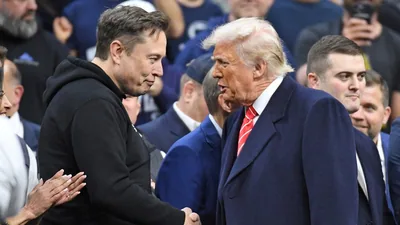
A provocative meme has been circulating widely on social media: “Elon Musk says Italians should stay in Italy and the Japanese in Japan. Then why the hell is this European South African in North America?”
The post attempts to highlight what critics see as hypocrisy — pointing out that Elon Musk, born in Pretoria, South Africa in 1971 to a Canadian mother and South African father, left his home country as a young man and eventually built his empire in the United States.
However, the premise itself is misleading.
What Elon Musk Actually Said
In December 2023, during a visit to Italy, Musk spoke at an event hosted by Prime Minister Giorgia Meloni. He expressed concern about collapsing birth rates in developed nations and warned that mass immigration alone cannot solve the demographic crisis without eroding cultural identity.
Key parts of his actual comments:
- “I think there is value to a culture. We don’t want Japan to disappear. We don’t want Italy as a culture to disappear.”
- “Italy is the people of Italy. The buildings are there, but really what is Italy? Italy is the people of Italy.”
- He urged Italians to “make more Italians” by having more children to preserve their culture.
Musk has repeatedly made similar points about Japan, France, and other nations with very low fertility rates. His core argument is not “no one should ever leave their country,” but rather that native populations should have enough children to maintain their cultural continuity, instead of relying indefinitely on large-scale replacement migration.
Fact-checking outlets such as PolitiFact and Snopes have rated the viral claim that Musk said “Italians should stay in Italy and Japanese should stay in Japan” as False. He advocated for cultural preservation through higher birth rates, not a total ban on movement.
The Counter-Argument: “Why Is Elon in America?”
Critics use Musk’s own background to challenge him:
- Musk was born and raised in South Africa (a country with complex racial and political history under and after apartheid).
- He moved to Canada at age 17, later to the United States, where he founded or led companies like Zip2, PayPal, SpaceX, Tesla, and xAI.
- He became a naturalized U.S. citizen and has lived most of his adult life in North America.
Opponents argue this makes him a hypocrite for criticizing high levels of immigration or warning about cultural replacement in Europe and East Asia.
Musk’s Consistent Position on Immigration
Musk has never been against all immigration. He has repeatedly said:
- He supports legal, high-skilled immigration.
- He believes countries should control their borders and prioritize merit-based systems.
- Uncontrolled mass migration, especially low-skilled or culturally incompatible inflows, can strain social services, lower social trust, and accelerate cultural change that many citizens did not consent to.
- He frequently cites Japan as a positive example: a highly homogeneous, safe, and technologically advanced society with very strict immigration policies — and extremely low crime rates.
In short, Musk distinguishes between:
- Individual talented people choosing to move and contribute (like himself, or millions of skilled immigrants to the U.S.).
- Large-scale demographic transformation through sustained high immigration combined with native birth rates far below replacement level (currently around 1.3–1.6 children per woman in Italy, Japan, South Korea, etc.).
A Fairer Question
The more honest debate is not “Why did Elon leave South Africa?” but:
Should nations have the right to preserve their distinct cultural, linguistic, and ethnic character over time? Or is the future inevitably a borderless “melting pot” everywhere?
Musk’s answer appears to be: Some countries (like Japan) have chosen cultural continuity and should be allowed to maintain it. Others, especially in Europe, are undergoing rapid demographic shifts that many of their citizens never voted for and now regret.
Whether one agrees with Musk or not, the viral attack often misrepresents his actual words while ignoring the distinction between voluntary individual migration and state-driven demographic engineering.
What do you think? Is pointing out Musk’s South African origins a valid gotcha, or does it miss the deeper point about birth rates, cultural preservation, and sustainable immigration policy?
