
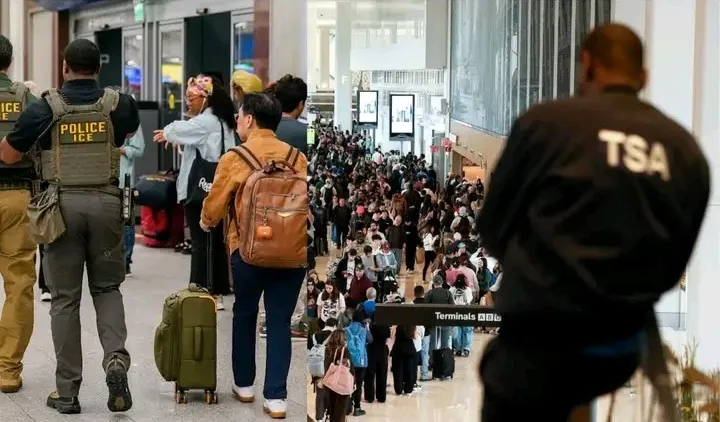
“Paying ICE to Come to the Atlanta Airport – Another Sign This Is a Very Unserious Place”
In a move that has drawn sharp criticism, Atlanta’s Hartsfield-Jackson International Airport — the world’s busiest airport — has reportedly been paying U.S. Immigration and Customs Enforcement (ICE) officers to be present on site, including covering their housing costs, instead of simply increasing compensation or overtime for existing TSA employees.
The decision has been called out as yet another example of wasteful and misguided priorities at one of America’s most important transportation hubs.
Rather than investing directly in the Transportation Security Administration (TSA) workforce that handles the daily screening of millions of passengers, airport authorities have chosen to bring in ICE personnel and provide them with housing benefits. Critics argue this approach is not only more expensive but also reflects a deeper dysfunction in how security and operations are managed at major U.S. airports.
“Why are we paying ICE to come here and housing them when we could just pay our own TSA employees better?” one frustrated observer remarked. “This is supposed to be a world-class airport, yet we’re making decisions that make it look like a very unserious place.”
The arrangement has fueled accusations of misplaced priorities. TSA officers, who are federal employees tasked with passenger and baggage screening, have long complained about low pay, difficult working conditions, and chronic understaffing. Many believe that directing funds toward additional TSA compensation and better working conditions would be far more effective and logical than outsourcing security functions to another agency.
Supporters of the ICE presence argue that heightened immigration enforcement and additional layers of security are necessary in today’s environment. However, detractors counter that turning a civilian airport into a staging ground for immigration enforcement creates unnecessary tension and diverts resources from core aviation security needs.
The controversy highlights a broader issue plaguing many U.S. airports: bureaucratic inefficiency, overlapping agency responsibilities, and a tendency to throw money at complex solutions instead of addressing root problems like employee retention and morale.
As travelers continue to face long lines, flight delays, and rising frustration at Hartsfield-Jackson, the decision to pay for ICE officers — complete with housing — is being held up as a prime example of why many Americans increasingly view their major institutions as “very unserious places.”
At a time when efficiency, fiscal responsibility, and passenger experience should be top priorities, spending extra taxpayer or airport dollars to bring in one federal agency to do work that could be supported by another raises serious questions about competence and common sense.
