
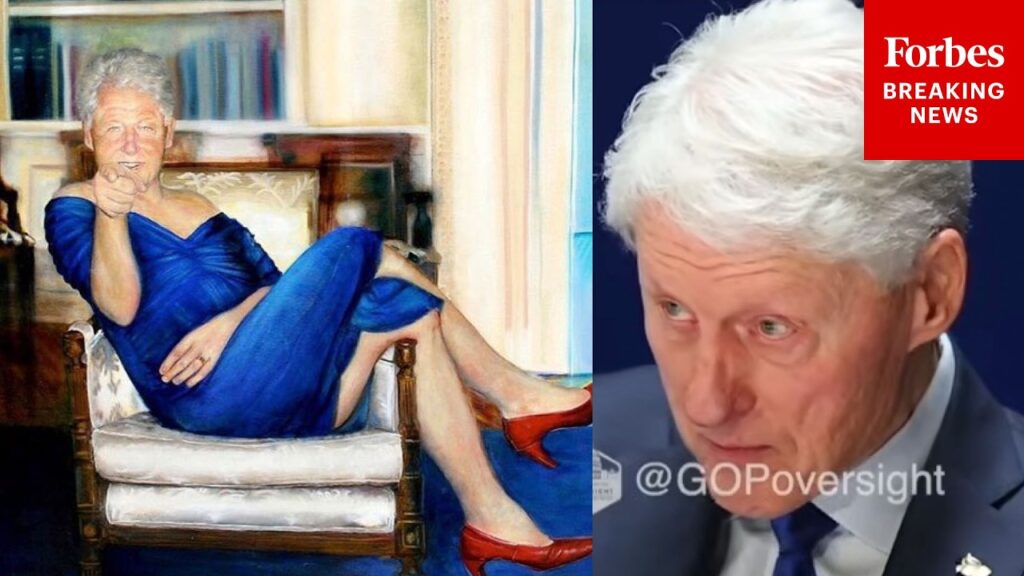
In testimony before the House Oversight Committee’s probe into Jeffrey Epstein’s activities, former President Bill Clinton addressed questions about artifacts discovered in Epstein’s residences and his past associations with the convicted sex offender. The session, part of broader congressional scrutiny following recent document releases, focused on a painting, framed documents, and allegations tied to Epstein’s private island.
The ‘Blue Dress’ Painting and Related Artifacts Investigators presented Majority Exhibit 15: a portrait depicting Clinton wearing what was described as the “famous blue dress” associated with White House intern Monica Lewinsky during the 1990s scandal. Clinton stated he had “never seen it in person” and was unaware of why it was created. When asked if he knew the motivation behind the painting, objections were raised on grounds of speculation.
A framed plain letterhead document displayed next to the painting was also introduced. Clinton confirmed familiarity with a separate handwritten note he had sent Epstein for his 50th birthday but denied writing additional notes beyond one thanking Epstein for allowing him privacy on an airplane to nap amid a crowd.
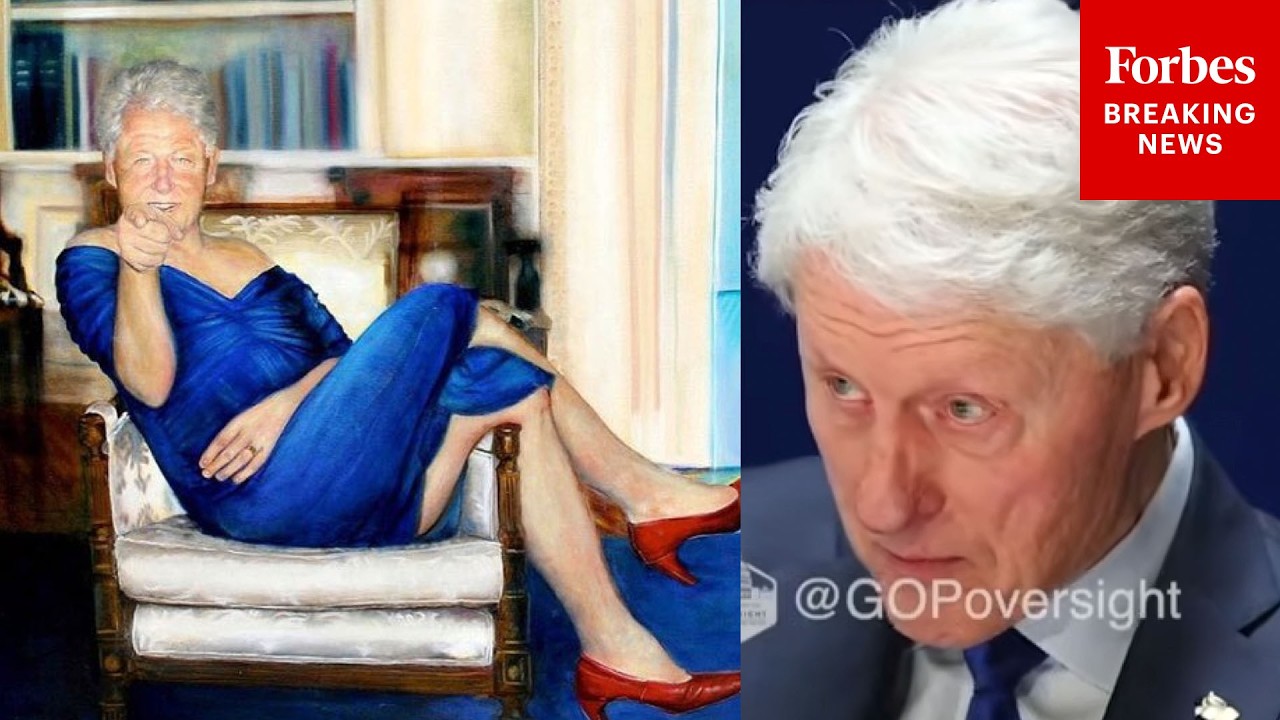
Denials of Introductions and Island Presence Clinton was questioned about whether he ever introduced Epstein to Monica Lewinsky or other young female White House staffers. He responded unequivocally: “I did not.”
On Epstein’s private island in the U.S. Virgin Islands—where Virginia Giuffre and others alleged sexual abuse and orgies occurred—Clinton denied any visits. He stated he was “never on the island” and clarified he had never been in the Virgin Islands with Epstein, except for one documented public trip involving Epstein’s then-wife. When shown excerpts from Giuffre’s testimony (Majority Exhibit 16, page 49) referencing Epstein’s island activities—including claims of regular “sexual orgies”—and mentions of favors or being “in each other’s pockets,” Clinton maintained he had no knowledge of such events.
Airplane Arrangement and Perceived Favors Clinton described a mutual understanding with Epstein involving the use of Epstein’s private airplane for Clinton Foundation AIDS relief programs worldwide. In exchange, Clinton agreed to discuss economics and politics during long flights. He emphasized: “I kept my word and he seemed to honor his.” When asked if he ever felt he “owed” Epstein a favor, Clinton replied he did not view it that way, framing it as a balanced professional arrangement rather than quid pro quo.
Broader Context and Implications The testimony aligns with Clinton’s prior public statements denying awareness of Epstein’s criminal behavior before Epstein’s 2008 Florida plea deal (to which Clinton referenced no direct involvement). No evidence presented linked Clinton to Epstein’s alleged crimes, and he reiterated seeing “nothing” improper during their interactions, which primarily involved travel and policy discussions post-presidency.
The session highlights ongoing efforts to examine Epstein’s network of influential associates through artifacts, prior victim testimonies (e.g., Giuffre’s), and recovered items from Epstein’s properties. While Clinton’s responses focused on denials and limited, non-criminal interactions, the probe continues to explore potential overlaps between Epstein’s social circle and documented abuses.
