

Concerns about declining global birth rates have gained traction in recent years, particularly among some ultra-wealthy tech and business figures. However, certain high-profile cases reveal how pro-natalist advocacy—urging higher reproduction rates—can intersect with troubling ideas reminiscent of eugenics, the discredited pseudoscience of selective breeding to “improve” humanity.
Jeffrey Epstein’s Vision of Genetic Seeding In the early 2000s, the late financier Jeffrey Epstein openly discussed plans to use his 33,000-square-foot Zorro Ranch in New Mexico as a site for impregnating women with his DNA. According to a major 2019 New York Times investigation, Epstein hoped to father children with up to 20 women at a time, aiming to propagate what he viewed as superior genetic material. This idea was tied to his fascination with transhumanism—the notion of enhancing humanity through genetic engineering, artificial intelligence, and other technologies. Critics have likened it to a modern revival of eugenics, a field historically linked to controlled breeding and discredited racial hierarchies (including Nazi-era programs).
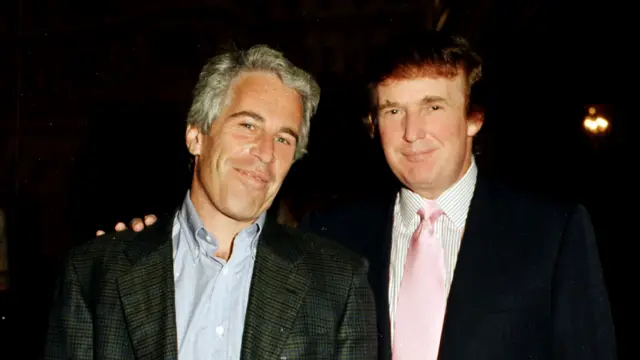
Epstein surrounded himself with prominent scientists and Nobel laureates (such as Murray Gell-Mann, Stephen Hawking, and George Church) by hosting lavish events, donating millions to institutions like Harvard, and flying guests to his private island. He reportedly drew inspiration from the now-defunct Repository for Germinal Choice, a 1980s sperm bank that collected donations from high-IQ individuals like Nobel Prize winners to “strengthen the gene pool.” Epstein also expressed interest in cryonics, wanting his head and genitals preserved for potential future revival. While no evidence shows the “baby farm” plan was ever executed, the discussions highlighted his arrogance in using wealth and connections to pursue fringe ideas about genetically engineering humanity’s future.
Elon Musk’s Contemporary Approach Elon Musk has become one of the most vocal advocates for addressing population decline, repeatedly warning that low birth rates—especially among “highly intelligent” or educated groups—threaten civilization. As of recent reports (including from The Wall Street Journal and The New York Times in 2024–2025), Musk has fathered at least 14 children with multiple women, including partners like Justine Wilson (six children, one deceased), Grimes (Claire Boucher, three children), and Neuralink executive Shivon Zilis (four children). Additional claims suggest more children may exist through sperm donation or informal arrangements.

Musk has publicly encouraged “smart people” to reproduce more, offered his sperm to friends and acquaintances (including former vice-presidential candidate Nicole Shanahan), and recruited potential mothers via direct messages on X (formerly Twitter). Reports describe efforts to build a large family compound in Austin, Texas, with adjoining properties for his children and some of their mothers, allowing communal living and easier access for him. Sources indicate Musk has pushed for large families (e.g., up to 10 children in some cases), favored procedures like C-sections (citing potential for “larger brains”), and used NDAs to maintain privacy.
This aligns with a broader “pronatalist” movement among some Silicon Valley and right-leaning figures, where fears of demographic collapse sometimes mask preferences for reproduction among select groups deemed “high-value” (intelligent, educated, or otherwise “superior”). Publications like The Atlantic (2025) and The Guardian have noted how modern pronatalism can blend with eugenics-like undertones, including selective embryo screening or genetic enhancement, even as proponents reject the “eugenics” label.
A Pattern of Power and Objectification While Epstein’s actions were criminal and involved exploitation (including minors), and Musk’s are public and consensual in reported cases, both illustrate how extreme wealth can fuel visions of personal genetic legacies. Epstein treated women as vessels for his DNA ambitions; Musk’s approach, while framed as concern for humanity, has drawn criticism for objectifying partners and prioritizing certain bloodlines. These cases highlight broader ethical questions: Should billionaires’ personal reproductive ideologies influence societal norms or policy? And what risks arise when pro-natalism veers into selective breeding or genetic elitism?
The parallels are uncomfortable and demand scrutiny. As birth-rate debates intensify—fueled by figures in influential positions—society must distinguish genuine demographic concerns from self-serving or pseudoscientific agendas that echo discredited past ideologies.
(Sources include major investigations from The New York Times (2019 on Epstein; 2024 on Musk), The Wall Street Journal, The Atlantic (2025 pronatalism coverage), The Guardian, and related reporting up to early 2026. For a more neutral tone, shorter length, or added emphasis on specific aspects, let me know!)
